
When a homeowner passes away and leaves behind real estate, one of the first questions heirs and beneficiaries often ask is how the property can be sold. The answer typically depends on whether the property is held in a probate estate or a trust.
Understanding the difference between a probate sale and a trust sale is important because each process has unique legal requirements, timelines, costs, and responsibilities. While both methods can transfer ownership of inherited property, the path to selling the home can look very different.
In this guide, we’ll explain probate vs trust sales, how each process works in Washington, and which option may offer the fastest and simplest path for selling inherited real estate.
What Is a Probate Sale?
A probate sale occurs when a property owner dies and their estate must go through probate before assets can be distributed to heirs or beneficiaries.
Probate is a court-supervised legal process used to:
- Validate a will
- Identify estate assets
- Pay outstanding debts
- Resolve creditor claims
- Transfer ownership to beneficiaries
When a home is part of a probate estate, the property may need to remain under the control of the estate until the probate process is completed or the court authorizes its sale.
Probate sales are commonly handled by:
- An executor named in the will
- A personal representative
- A court-appointed administrator
These individuals are responsible for managing estate assets and ensuring the sale complies with Washington probate laws.
What Is a Trust Sale?
A trust sale occurs when a property is owned by a trust rather than an individual.
The most common type is a revocable living trust, which allows homeowners to place assets into the trust during their lifetime.
When the trust creator passes away:
- The trust continues to exist
- Assets remain under trust ownership
- Probate is often avoided
- A successor trustee manages the assets
The successor trustee can typically sell trust-owned property according to the instructions contained within the trust document.
Because court involvement is usually unnecessary, trust sales are often faster and less complicated than probate sales.
Probate vs Trust Sale: The Main Difference
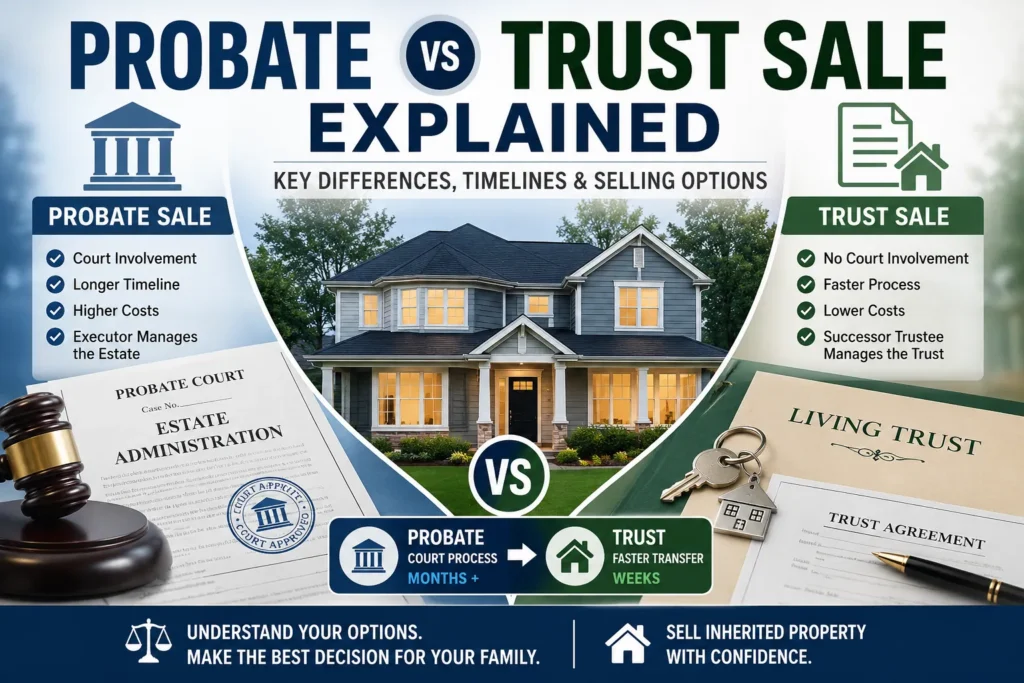
The biggest difference between a probate sale and a trust sale is court involvement.
Probate Sale
- Requires probate administration
- Court oversight may be necessary
- Executor manages the estate
- Probate timelines can delay sales
- Additional legal costs may apply
Trust Sale
- Usually avoids probate
- No court supervision required
- Successor trustee controls the property
- Faster transfer process
- Lower administrative costs
For many families, avoiding probate is one of the primary reasons they establish living trusts.
How Probate Sales Work in Washington
The Washington probate process generally follows several steps before a property can be sold.
Step 1: Probate Filing
The estate is opened with the probate court.
Step 2: Personal Representative Appointment
The court appoints an executor or personal representative.
Step 3: Asset Identification
The estate’s assets, including real estate, are identified and documented.
Step 4: Creditor Notification
Creditors are notified and given an opportunity to file claims.
Step 5: Property Sale Authorization
Depending on circumstances, the personal representative may obtain authority to sell the home.
Step 6: Distribution of Proceeds
After debts and expenses are paid, remaining proceeds are distributed to beneficiaries.
Because probate involves multiple legal steps, the process can take several months or longer.
Homeowners and heirs interested in the probate process in Washington should understand how these timelines can affect a property sale.
How Trust Sales Work in Washington
Trust sales are generally more straightforward.
When the trust creator dies:
Step 1: Successor Trustee Takes Control
The successor trustee assumes responsibility for managing trust assets.
Step 2: Review the Trust Document
The trustee reviews instructions regarding the property.
Step 3: Determine Property Value
An appraisal or market analysis may be obtained.
Step 4: Prepare the Property for Sale
The trustee decides whether to:
- Make repairs
- Sell as-is
- List traditionally
- Accept a cash offer
Step 5: Sell the Property
The trustee completes the sale and distributes proceeds according to trust instructions.
Unlike probate, court approval is generally not required.
Which Is Faster: Probate Sale or Trust Sale?
In most cases, trust sales are significantly faster.
Probate Sale Timeline
Typical timeline:
- Several months
- Sometimes longer depending on complexity
- Potential court delays
- Creditor waiting periods
Trust Sale Timeline
Typical timeline:
- Weeks rather than months
- No probate court involvement
- Faster decision-making
- Fewer administrative hurdles
For heirs looking to sell inherited property quickly, trust-owned homes often provide a much smoother experience.
Probate Sale vs Trust Sale: Costs Comparison
Probate Costs
Probate expenses may include:
- Court filing fees
- Attorney fees
- Executor expenses
- Administrative costs
- Property maintenance costs
Trust Sale Costs
Trust sales often involve:
- Trustee administration expenses
- Property maintenance costs
- Standard real estate transaction fees
Because trust administration bypasses probate court, total costs are frequently lower.
Who Has Authority to Sell the Property?
Probate Property
The executor or personal representative generally controls the sale.
Responsibilities include:
- Managing estate assets
- Obtaining valuations
- Negotiating offers
- Distributing proceeds
Trust Property
The successor trustee controls the sale.
Trustees have fiduciary responsibilities to:
- Protect beneficiary interests
- Follow trust instructions
- Manage assets responsibly
Understanding who has legal authority is critical before listing inherited property.
Can Beneficiaries Sell the Property?
Beneficiaries do not automatically have authority to sell inherited property.
Authority typically rests with:
- The executor during probate
- The successor trustee during trust administration
However, beneficiaries often have input regarding:
- Sale timing
- Property value
- Distribution of proceeds
Conflicts among heirs can occasionally delay the process, especially when multiple beneficiaries are involved.
Common Challenges with Probate and Trust Sales
Multiple Heirs
Disagreements may arise regarding:
- Property value
- Repairs
- Sale timing
- Distribution of proceeds
Property Condition
Inherited homes often require repairs due to:
- Deferred maintenance
- Vacancy
- Aging systems
Title Issues
Title concerns can delay either type of sale.
Common issues include:
- Missing heirs
- Unreleased liens
- Ownership disputes
Resolving these problems early can help prevent closing delays.
Should You Repair the Property Before Selling?
One major decision involves determining whether repairs make financial sense.
Benefits of Repairs
- Potentially higher sale price
- Increased buyer interest
Benefits of Selling As-Is
- Faster sale
- Lower costs
- Less stress
- No contractor management
Many beneficiaries choose to sell inherited homes as-is, especially when they live out of state or want to avoid renovation expenses.
Can Cash Buyers Purchase Probate and Trust Properties?
Yes.
Cash home buyers frequently purchase:
- Probate properties
- Trust-owned homes
- Inherited houses
- Distressed properties
- Vacant homes
Benefits often include:
- Fast closing
- No repairs required
- No financing delays
- Flexible timelines
For heirs seeking convenience and speed, cash buyers can simplify the transaction significantly.
Learning about the cash home buying process can help beneficiaries determine whether a direct sale is the right solution.
Probate Sale vs Trust Sale: Which Is Better?
Neither option is inherently better because the ownership structure is typically determined before the homeowner passes away.
However, trust sales often provide advantages such as:
- Faster transactions
- Lower costs
- Greater privacy
- Less court involvement
Probate sales may still proceed smoothly when estates are properly managed and beneficiaries cooperate.
The best approach depends on:
- Estate planning decisions
- Property condition
- Family circumstances
- Beneficiary goals
Frequently Asked Questions
Does a Trust Avoid Probate?
In most cases, yes. Assets properly transferred into a living trust generally avoid probate.
Can a Trust Property Be Sold Immediately?
Often yes, provided the successor trustee has authority under the trust document.
How Long Does a Probate Sale Take?
Probate timelines vary but frequently take several months.
Who Signs Documents During a Probate Sale?
The executor or personal representative usually signs on behalf of the estate.
Who Signs Documents During a Trust Sale?
The successor trustee signs on behalf of the trust.
Can Cash Buyers Purchase Probate Real Estate?
Yes. Many cash buyers specialize in inherited homes, probate properties, and trust-owned real estate.
Final Thoughts
Understanding probate vs trust sales is essential when selling inherited property in Washington. While both methods allow heirs to transfer and sell real estate, trust sales generally move faster because they avoid court-supervised probate proceedings.
Whether you’re dealing with a probate property or a trust-owned home, understanding ownership authority, timelines, legal responsibilities, and selling options can help simplify the process.
If you’re looking for a fast and hassle-free solution, exploring options to sell my house fast Washington may help you avoid lengthy delays, eliminate repair concerns, and successfully navigate the sale of inherited property.