
Selling a fire-damaged house in Washington can be more complicated than selling a property in normal condition. Fire can affect the structure, electrical system, roof, walls, flooring, plumbing, and other parts of the home. Smoke and water used during firefighting can create additional damage.
If you’re trying to sell a fire-damaged house in Washington, you generally have several options. You can restore the property before selling, sell it in its current condition, or consider buyers who purchase distressed properties.
The right approach depends on the extent of the damage, insurance coverage, repair costs, property value, and your selling goals.
Key Takeaways:
- A fire-damaged house in Washington can generally be sold.
- You do not necessarily have to completely restore the property before selling.
- Document the fire, smoke, and water damage before marketing the property.
- Review your insurance claim and restoration options.
- Compare repair costs with the potential net proceeds from an as-is sale.
- Washington’s seller disclosure statement addresses material fire damage.
- Selling as-is does not mean concealing known material problems.
- Some cash buyers and investors may consider fire-damaged properties.
- Tenant-occupied properties require additional consideration.
- Review offers based on the complete contract terms rather than price alone.
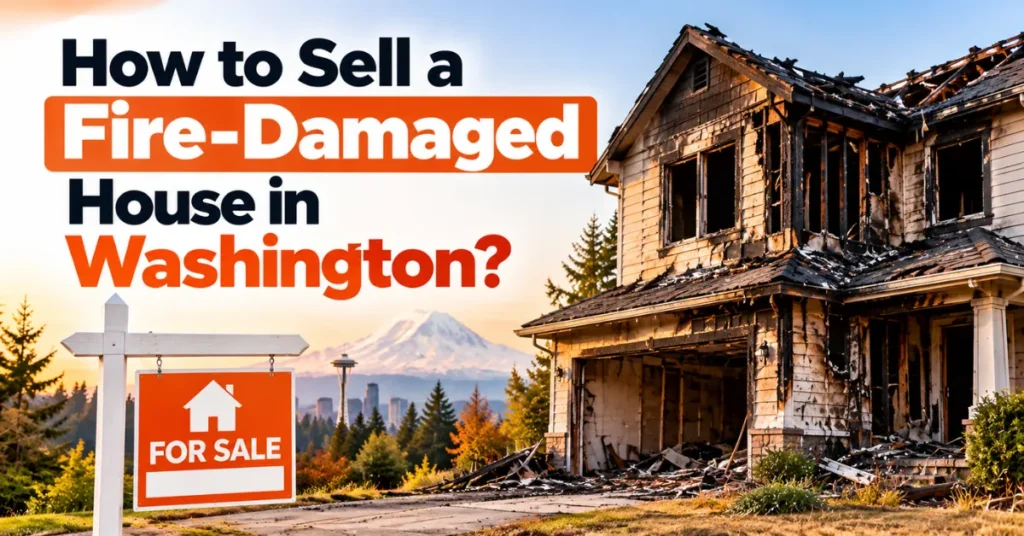
Can You Sell a Fire-Damaged House in Washington?
Yes, a fire-damaged property can generally be sold, although the condition of the property can affect the transaction, buyer interest, financing options, and price.
A seller does not necessarily have to completely restore a fire-damaged house before selling it. Some buyers may be willing to purchase properties that require substantial repairs or restoration.
However, selling a fire-damaged house as-is does not mean hiding known damage. Washington’s seller disclosure law addresses material damage from fire and other causes. The current statutory disclosure statement specifically asks whether the property has experienced material damage from fire, wind, floods, earthquakes, or other listed causes.
Before putting the property on the market, understand its condition and gather documentation relating to the fire and any repairs.
How Fire Damage Affects a House’s Value
A house fire can affect value in several ways.
The damage may involve more than the visibly burned area. Depending on the incident, the property may have:
- Structural damage
- Smoke damage
- Water damage from firefighting
- Roof damage
- Electrical damage
- Plumbing damage
- Damaged insulation
- Damaged drywall
- Flooring damage
- HVAC damage
- Mold or moisture concerns
- Damaged windows and doors
- Exterior damage
- Odor and soot contamination
A professional inspection or contractor assessment can help determine the scope of the damage.
The property’s location, lot value, size, pre-fire condition, extent of restoration required, and comparable properties can also affect its potential market value.
Step 1: Make Sure the Property Is Safe
Safety should come before preparing the property for sale.
After a significant fire, parts of the house may be unsafe to enter because of structural instability, electrical hazards, damaged roofing, smoke contamination, or other conditions.
Depending on the circumstances, you may need qualified professionals to determine whether the property can safely be accessed.
Do not encourage buyers, contractors, tenants, or other people to enter areas that may be unsafe.
Step 2: Document the Fire Damage
Create a detailed record of the property’s condition.
Take photographs and keep copies of relevant documents, including:
- Fire department reports
- Insurance documents
- Insurance claim information
- Contractor estimates
- Inspection reports
- Restoration invoices
- Repair receipts
- Permit records
- Photographs from before and after the fire
- Documentation of temporary repairs
Good documentation can help you understand the property and give prospective buyers better information.
Step 3: Contact Your Insurance Company
If the property is insured, contact your insurance company and understand the status of the claim before deciding how to sell.
Depending on the policy and circumstances, insurance may cover some eligible losses or restoration expenses.
Ask your insurer about:
- Claim status
- Coverage
- Deductible
- Approved repairs
- Restoration requirements
- Insurance proceeds
- Required documentation
- Whether additional inspections are necessary
The insurance claim and the property sale are separate matters, so understand how an outstanding claim or insurance payment could affect your transaction.
Step 4: Determine the Extent of Repairs
Before deciding whether to renovate, get a realistic understanding of the work required.
Depending on the fire, repairs may include:
- Structural repairs
- Roof replacement
- Electrical work
- Plumbing repairs
- HVAC replacement
- Drywall replacement
- Flooring replacement
- Smoke remediation
- Soot removal
- Water damage restoration
- Painting
- Window replacement
- Kitchen or bathroom reconstruction
For major damage, consider obtaining estimates from qualified contractors or specialists.
Step 5: Compare Repair Costs With the Potential Sale Price
One of the most important decisions is whether restoring the property is financially worthwhile.
Consider this basic calculation:
Potential sale price after repairs − repair costs − holding costs − selling expenses = estimated net proceeds
Compare that with the potential proceeds from selling the property in its current condition.
For example, completing a large renovation may increase the property’s potential sale price, but the additional value may not justify the renovation expense, financing costs, insurance, utilities, taxes, and time involved.
Step 6: Consider Selling the Property As-Is
An as-is sale means the buyer evaluates the property in its current condition rather than expecting the seller to complete a full restoration before closing.
This may be an option when:
- The property has major fire damage
- Restoration costs are too high
- The seller does not want to manage construction
- The property has been vacant
- The seller needs to dispose of a distressed property
- The owner does not want to continue paying carrying costs
- The property requires extensive renovation
Some investors and cash buyers consider distressed or damaged properties, although every buyer has different criteria and transaction terms.
An as-is transaction still requires appropriate disclosure and accurate information about known property conditions.
Step 7: Understand Washington Disclosure Requirements
Washington’s residential seller disclosure requirements are particularly important when selling a fire-damaged property.
The current RCW 64.06.020 disclosure statement asks about material damage from fire and other causes. It also addresses defects involving areas such as foundations, walls, chimneys, ceilings, fireplaces, electrical systems, plumbing, and other components.
The disclosure statement is based on the seller’s actual knowledge of existing material facts or material defects.
This means an as-is sale should not be treated as permission to conceal known problems.
If you’re unsure about what must be disclosed in your particular transaction, consider discussing the situation with a Washington real estate attorney or qualified real estate professional.
Step 8: Decide Whether to Repair or Sell As-Is
There is no single solution for every fire-damaged property.
| Consideration | Repair Before Selling | Sell As-Is |
|---|---|---|
| Upfront Cost | Usually higher | Potentially lower |
| Restoration | Seller manages repairs | Buyer evaluates existing condition |
| Timeline | May take weeks or months | May reduce preparation time |
| Property Condition | Improved before marketing | Existing damage remains |
| Buyer Pool | May appeal to traditional buyers | May appeal to investors and as-is buyers |
| Holding Costs | Can increase during restoration | Potentially reduced |
| Construction Risk | Seller takes on project risk | Buyer may assume more repair responsibility |
| Final Outcome | Depends on repair investment | Depends on buyer and negotiated terms |
The right approach depends on the property’s condition, repair costs, insurance situation, local market, and the seller’s financial objectives.
Selling a Fire-Damaged House to a Cash Buyer
Some real estate investors and cash buyers consider properties that need significant repairs.
A direct buyer may evaluate factors such as:
- Current property condition
- Estimated repair costs
- Location
- Lot value
- Comparable properties
- Title status
- Insurance situation
- Required restoration
- Expected resale or investment value
A cash buyer does not automatically mean a faster or higher-priced sale. Review the purchase agreement carefully and understand the buyer’s proposed closing process.
Before accepting an offer, consider checking:
- Proof of funds
- Purchase price
- Earnest money
- Inspection terms
- Contingencies
- Closing date
- Closing costs
- Possession requirements
- Any requested repairs or credits
What If the House Has Smoke and Water Damage?
Fire damage often extends beyond the area directly affected by flames.
Smoke can affect walls, ceilings, insulation, furniture, HVAC systems, and other parts of the home. Water from firefighting can create additional moisture-related problems.
This means a property that appears to have limited fire damage may still require extensive cleaning, remediation, or restoration.
Document both fire damage and secondary damage when evaluating the property.
Can You Sell a House With Partial Fire Damage?
Yes, a property does not necessarily need to be completely burned down to qualify as a damaged-property sale.
For example, a house might have:
- Kitchen fire damage
- Garage fire damage
- Attic damage
- Electrical damage
- Smoke damage throughout the house
- Roof damage
- One damaged section requiring reconstruction
The buyer will generally evaluate the condition and determine whether the property fits their investment or renovation plans.
What If the Fire-Damaged House Is a Rental Property?
Selling a fire-damaged rental property can involve additional considerations if tenants are involved.
First, determine whether the property is safe and habitable. Then review the lease, tenant status, insurance claim, and applicable Washington landlord-tenant requirements.
If tenants remain in the property, do not assume that the fire or planned sale automatically terminates their tenancy.
You may also need to address:
- Tenant relocation
- Rent
- Security deposits
- Property access
- Insurance
- Lease obligations
- Repairs
- Property showings
For a tenant-occupied fire-damaged property, legal and safety issues should be addressed before arranging access or marketing the property.
What Documents Should You Have Before Selling?
Organizing your documents can make the transaction easier.
Try to gather:
- Property deed information
- Fire department report
- Insurance claim documents
- Insurance settlement information
- Contractor estimates
- Restoration reports
- Inspection reports
- Repair invoices
- Permit information
- Before-and-after photographs
- Property tax records
- Mortgage information
- Seller disclosure documents
The exact documents needed will depend on the transaction and the property’s circumstances.
Should You Restore the House Before Listing It?
Restoration may make sense when the expected increase in sale value substantially exceeds the cost and risk of the project.
It may be less attractive when:
- Damage is extensive
- Restoration costs are uncertain
- Contractors are difficult to schedule
- The property has substantial structural damage
- The owner has limited renovation funds
- The property has been vacant for an extended period
- Holding costs are becoming expensive
Get realistic estimates before committing to a major restoration project.
Common Mistakes When Selling a Fire-Damaged House
Hiding Fire Damage
Known material damage should not simply be concealed because the property is being sold as-is.
Underestimating Restoration Costs
Fire damage can involve structural, electrical, smoke, and water-related repairs that are not obvious from a visual inspection.
Starting Repairs Without a Clear Budget
Large restoration projects can become more expensive than expected.
Ignoring Insurance Documentation
Keep records of claims, payments, inspections, and restoration work.
Failing to Check Permit Requirements
Some restoration or reconstruction work may require permits and inspections. Keep documentation for work that has already been completed.
Accepting the First Cash Offer
Compare the complete transaction terms, not just the headline purchase price.
Allowing Unsafe Access
Do not allow prospective buyers or contractors to enter unsafe portions of the property.
Conclusion
Selling a fire-damaged house in Washington requires careful consideration of the property’s condition, insurance situation, repair costs, disclosure requirements, and available selling options.
You can compare the potential financial outcome of restoring the property with selling it in its current condition. For some owners, completing repairs may make sense; for others, an as-is sale may reduce the cost and time involved in preparing the property.
Before selling, document the damage, organize insurance and repair records, understand applicable Washington disclosure requirements, and make sure prospective buyers receive accurate information about the property’s condition. Washington’s current seller disclosure requirements specifically address material fire damage and other property defects.