

Affordability is still a big factor in housing decisions all over Washington. If you’re moving for work, downsizing, or planning to sell, knowing how much things cost in different parts of the country can help you decide what to do next. When deciding whether to stay, move, or sell a property, homeowners often consider areas with lower costs, such as those offered by We Buy House As Is.
“Did you know, according to the U.S. Census Bureau, Washington’s median household income and housing costs have both risen over the past decade, influencing where residents seek affordability?”
Based on common reports of the cost of living, housing demand, and the economy in different parts of Washington, here is a useful list of the cheapest places to live in Washington. These observations show general trends, not promises of what prices will be in the future.
Key Takeaways
- Housing costs vary widely across Washington regions.
- Eastern Washington cities often offer lower home prices.
- Taxes, utilities, and transportation are all part of what makes something affordable.
- Decisions about moving depend on work and lifestyle.
- Simplified selling options may be beneficial during times of change.
Objective
Talk about how prices are changing in Washington cities, point out places that are cheaper, and help homeowners understand how differences in prices between regions can affect their decisions to move or sell their homes.
Affordable Alternatives to the Coastal Hubs
The cost of living is very different between coastal cities and communities in the middle of the country. People often mention the following places when discussing housing in the area due to their lower home prices and living costs.
1. Yakima
Agricultural economy, lower median home prices, and moderate population growth contribute to consistent affordability compared with major metro areas.
2. Spokane
Eastern Washington’s largest city offers urban amenities with housing costs typically below western Washington markets.
3. Wenatchee
Known for regional agriculture and outdoor recreation, Wenatchee often maintains more accessible housing costs than coastal cities.
4. Kennewick
Part of the Tri-Cities region, Kennewick’s steady development supports relatively moderate housing demand.
5. Pasco
Population growth has increased interest, but costs often remain lower than statewide averages.
6. Richland
Economic stability linked to regional employers contributes to consistent housing availability.
7. Longview
Industrial employment base and distance from major metro centers influence home pricing patterns.
8. Moses Lake
Lower density and regional development contribute to relatively accessible property prices.
9. Ellensburg
College-town dynamics create varied housing options with generally moderate pricing.
10. Aberdeen
Coastal proximity combined with smaller population size contributes to comparatively lower housing demand.
People frequently discuss these locations as some of the best cheap places to live in Washington, but their actual affordability depends on factors such as your job, commuting distance, and personal lifestyle choices.
What actually makes a place affordable?
True affordability typically includes:
- Property taxes and utilities
- Transportation and commute costs
- Local employment opportunities
- Insurance and maintenance expenses
- Availability of rental or resale demand
Moving from a city with a higher cost of living to a community with a lower cost of living can help some homeowners have more financial freedom in the long run.
How affordability trends affect home selling decisions
When homeowners consider relocating to a less expensive area, the logistics of selling their home often become a significant concern. The state of the property, the timing of the market, and the amount of work needed can affect the sale’s speed.
When homeowners have to move quickly, some of them look online for ways to sell your house in washington. We Buy House As Is talks about ways to make transactions easier by focusing on the condition of the property instead of the usual listing steps. These descriptions are based on what the company says on its website and are meant to help homeowners understand their options.
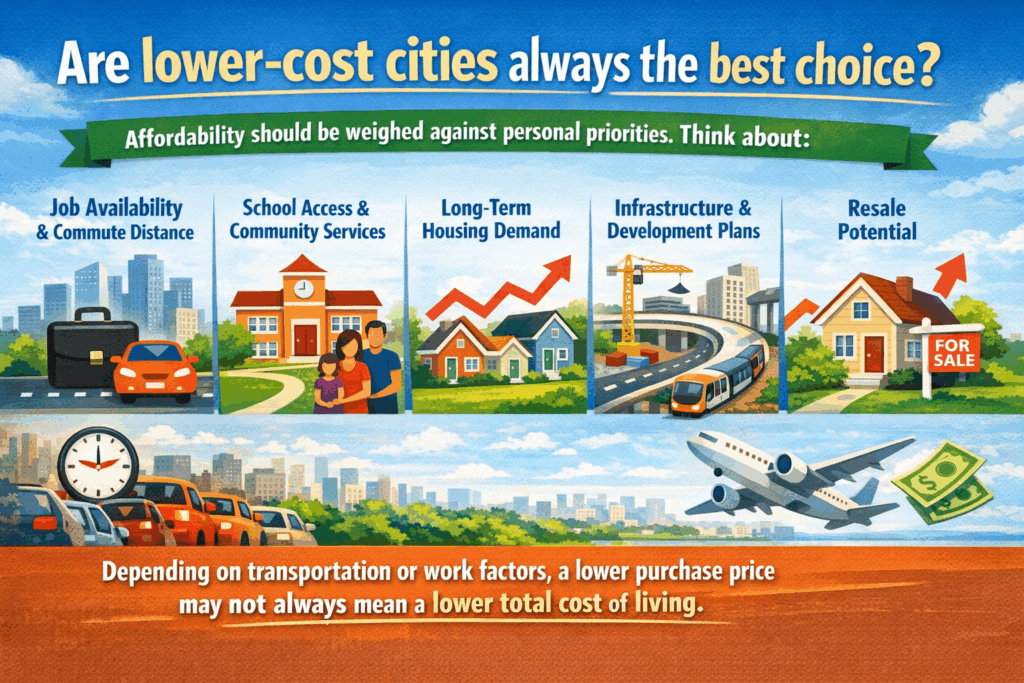
Are lower cost cities always the best choice?
Affordability should be weighed against personal priorities.
Think about:
- Job availability and commute distance
- School access and community services
- Long-term housing demand
- Infrastructure and development plans
- Resale potential
Depending on transportation or work factors, a lower purchase price may not always mean a lower total cost of living.
What if you want to move but avoid listing delays?
Some homeowners prioritizing convenience explore alternatives to traditional listings, including situations where a direct buyer may provide a cash offer on a home. These options might be interesting to sellers who care more about timing or the condition of the property than getting the most exposure for their listing.
Some property owners look into services like we buy house as is halfway through the decision making process. These services offer a direct purchase method that aims to cut down on preparation steps and speed up closing times, according to information on the company’s website.
Explore Affordable Living Options
When looking for a cheaper place to live, you need to think about price, opportunity, and long term stability. Even though housing prices change over time, making smart choices often starts with knowing how housing works in your area and what your needs are.
If you plan to move to a Washington community that is more affordable, looking into your selling options can make the move easier. We Buy House As Is tells you about direct purchase options that are meant to make the process easier and faster based on the condition of the property.
Contact us today for a no obligation cash offer and see how simple selling your home can be.
FAQs About the Cheapest Places to Live in Washington in 2026
Q1. For homeowners, what are the least expensive places to live in Washington?
Ans. In general, cities in eastern and central Washington have lower housing costs than cities on the coast. However, this can change depending on the market cycle.
Q2. Are the number of people living in affordable Washington cities going up?
Ans. Some places have seen their populations slowly grow, which can affect the demand for and prices of housing over time.
Q3. Is it common for people to move within Washington to save money?
Ans.Yes. Some people who live in the area move inland or to smaller cities to better manage their housing costs.
Q4. Does the price of a home affect how quickly it sells?
Ans.Yes. The time it takes to list a property and the interest of buyers can be affected by the market, the price, and the location.
Q5. Should I research employment before relocating?
Ans.Yes. Job availability and commute requirements significantly influence long-term affordability.