

Property taxes are a big part of the cost of owning a home, especially in cities like Seattle that are growing quickly. If you’re planning your housing budget or evaluating whether to keep or sell a property, understanding Seattle property tax 2026 expectations can help you plan realistically. At We Buy House As Is, homeowners often review tax obligations alongside market conditions when deciding next steps for their property.
“Did you know, according to the Washington State Department of Revenue, property taxes fund essential local services such as schools, emergency response, and infrastructure?”
The amount of taxes you pay can change from year to year because they depend on the assessed value, local levies, and measures that voters approve. Here is a useful, fact-based summary that should help make things clearer about how Seattle property taxes work in general and what homeowners should think about.
Key Takeaways
- The amount of property taxes you pay depends on the assessed value and local taxes.
- The amount of taxes you pay can change from year to year because of changes in the market.
- The most accurate estimate comes from official assessments.
- Taxes are a big part of the costs of owning a home.
- When costs go up, some homeowners rethink their plans.
Objective
Explain how property taxes are calculated in Seattle, what factors will affect the estimates for 2026, and how tax costs might affect their housing choices.
How Is Property Tax Calculated in Seattle?
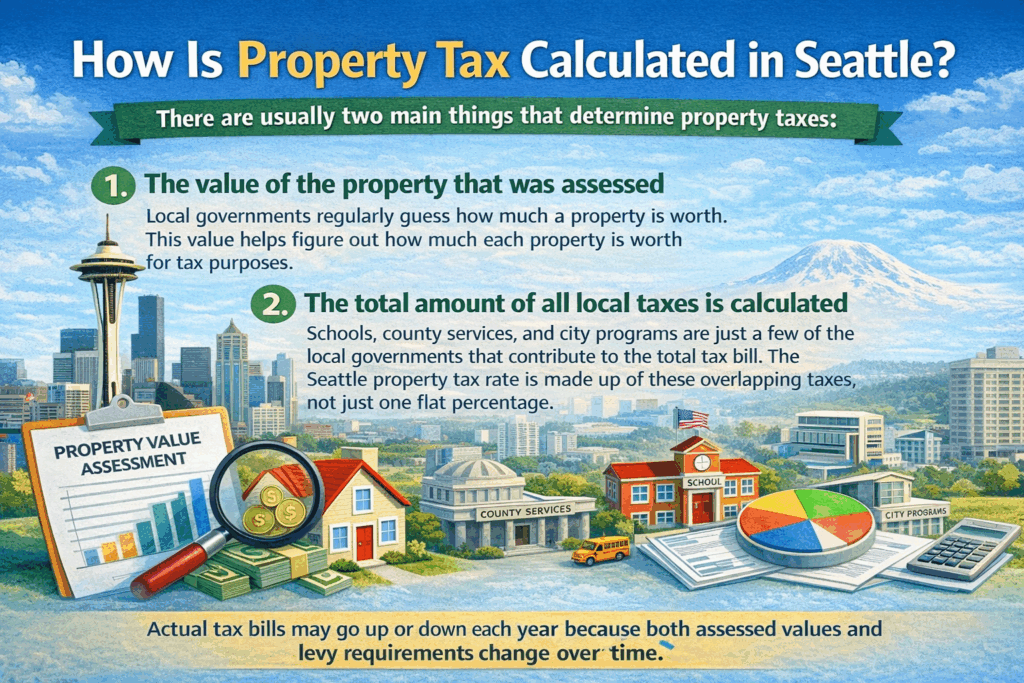
There are usually two main things that determine property taxes:
1. The value of the property that was assessed
Local governments regularly guess how much a property is worth. This value helps figure out how much each property is worth for tax purposes.
2. The total amount of all local taxes is calculated
Schools, county services, and city programs are just a few of the local governments that contribute to the total tax bill. The Seattle property tax rate is made up of these overlapping taxes, not just one flat percentage.
Actual tax bills may go up or down each year because both assessed values and levy requirements change over time.
What might homeowners expect to pay in 2026?
The exact amount of tax you owe depends a lot on where your property is in the metro area and how much it is worth. Even though they can’t be sure, homeowners often use the following to guess their future taxes:
- Current assessed value trends
- Historical levy adjustments
- Local government budget needs
- Voter-approved funding measures
If you want to plan, the best way to get an accurate estimate for a specific property is to look at official assessment notices from the King County Assessor’s Office.
These official sources give you specific calculations instead of general averages.
Why property taxes change over time
There are several things that affect changes in taxes each year:
Rising property values
If market values rise, taxes may rise even if levy rates stay the same.
Local funding needs
Property taxes pay for schools, transportation, and public services. The amount of property taxes may change to meet the needs of the community.
Population growth
Population growth can change the need for infrastructure and the priorities for public funding.
Because Seattle is still growing and changing its population, property tax trends are often a sign of the economy as a whole.
How taxes influence decisions about selling a home
When homeowners decide whether to keep or sell a property, they think about several ongoing costs, including property taxes. Costs going up, needing to move, or the state of the property can all affect timing.
Some homeowners who are exploring alternative options online seek ways to sell my house fast in Seattle, particularly when the costs of homeownership and market uncertainty coincide. The we buy house as is website says that the company focuses on direct purchase options that are meant to cut down on prep work and make the process easier based on the condition of the property.
These descriptions are meant to show how the company says it works and may help homeowners understand their options without having to rely only on traditional listings.
Are there exemptions or relief programs?
Some homeowners may be able to get help with their property taxes if they meet certain requirements, such as being older, disabled, or having a low income. Local government offices have official information about who can apply and how to do so.
Homeowners should check official public sources for accurate information because these programs require certain qualifications.
What if tax costs affect your housing plans?
Some homeowners rethink how affordable their homes will be in the long term when property taxes go up. You might be able to make changes to your budget, refinance, or sell.
In some cases, homeowners look into simpler transaction models where a direct buyer can make an instant cash offer for the house. The We Buy House As Is website talks about ways to make simple purchases based on the current condition of the property instead of getting it ready for listing.
This kind of approach might appeal to homeowners who value certainty and timing, but the results will be different for each property and market.
Understand Your Costs Before Making a Move
Property taxes are a constant cost that can affect how affordable a home is, how you plan for the future, and your long-term housing decisions. Because tax obligations depend on many local factors, looking at official assessments and understanding what drives costs can help.
If you are thinking about selling your house because your costs are going up or your priorities are changing, We Buy House As Is can help you learn about direct purchase options that make the process easier based on the condition of the property.
Contact us today for a free, no-obligation cash offer and get started with a simple, stress-free home sale.
Frequently Asked Questions
Q1. How do I find out how much my Seattle property tax will be in 2026?
Ans. Most of the time, property tax estimates are calculated by multiplying the assessed value by the combined local levy rates. The most accurate calculation comes from official assessment notices.
Q2.Does the value of a property have a direct effect on the amount of tax?
Ans. Yes. In general, higher assessed values mean higher total taxes.
Q3. Can property taxes go up even if the rates stay the same?
Ans. Yes. If the assessed value goes up, the total taxes may go up even if the rates stay the same.
Q4.Where can I check the details of my property taxes?
Ans. Local assessment offices keep official records that show tax information for each property.
Q5. Do property taxes have an effect on decisions to sell?
Ans. Yes. Homeowners often plan their finances and when to buy based on ongoing costs of ownership.